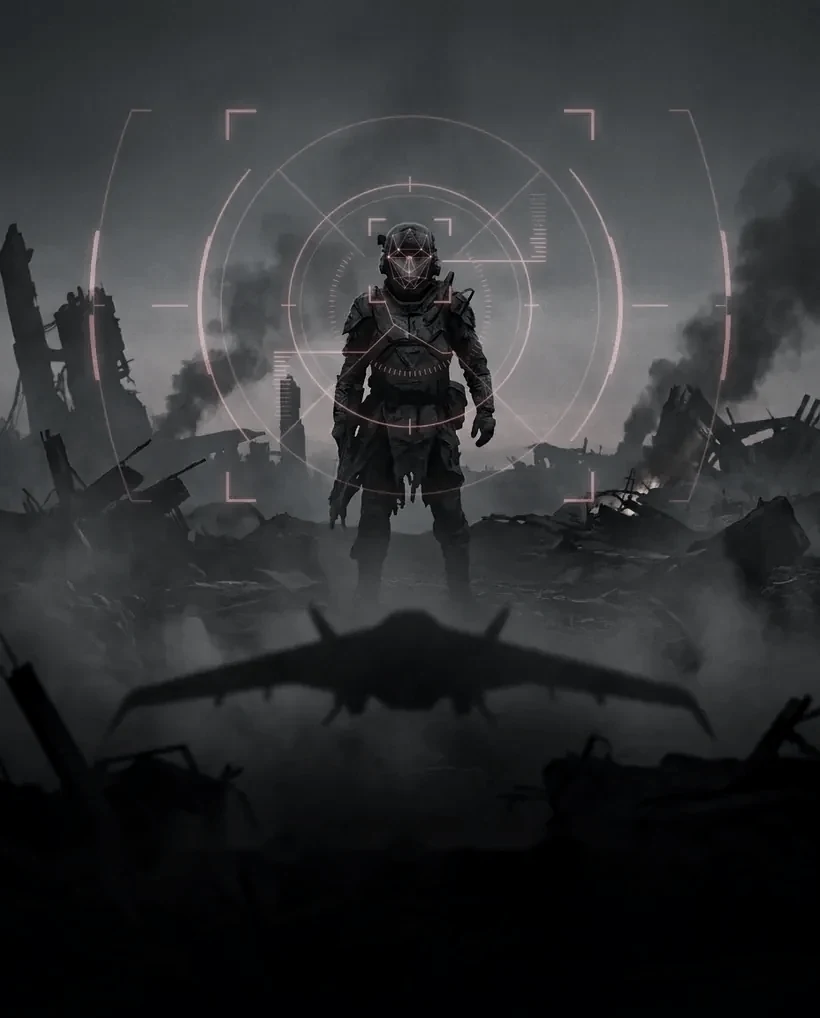
The old arms race was steel. The new arms race is silicon. Palantir sells the operating system for defense, Anduril builds autonomous weapons, and the Pentagon signed AI deals with OpenAI, Google, Nvidia, Microsoft, and xAI. War became a software business.
The money says it loud. Global military spending hit $2.9 trillion in 2025, the 11th straight record year, 2.5% of world GDP. Europe alone jumped 14% in 1 year. I forecast $12 trillion by 2040, a 4x.
Sounds extreme? Do the math the generals already did. NATO's new target: 5% of GDP. The Pentagon's 2027 request: $1.5 trillion, the largest in history. The last decade grew 41% before AI properly entered the battlefield.
Who profits? Both races. The silicon side: Palantir, Anduril, Nvidia. The steel side: Lockheed Martin, RTX (Raytheon), Northrop Grumman, and General Atomics in the US; Rheinmetall, BAE Systems, Thales, and Saab riding Europe's rearmament; Elbit in Israel, Baykar arming the world with drones from Turkiye. Raytheon already fields high-energy lasers: directed-energy weapons, war robots, and AI targeting move from the lab to the field. And the drone market? Forecasts spread from $40 billion to $260 billion by 2030. When the models spread that wide, the wave is bigger than the models.
This is the uncomfortable side of exponential tech. The same curve that builds humanoids and cures disease also builds the most capable weapons in history. Both lists run on the same silicon.
 Tracking